BCBR
Topic 13 · Selection of study population
Inclusion and exclusion criteria
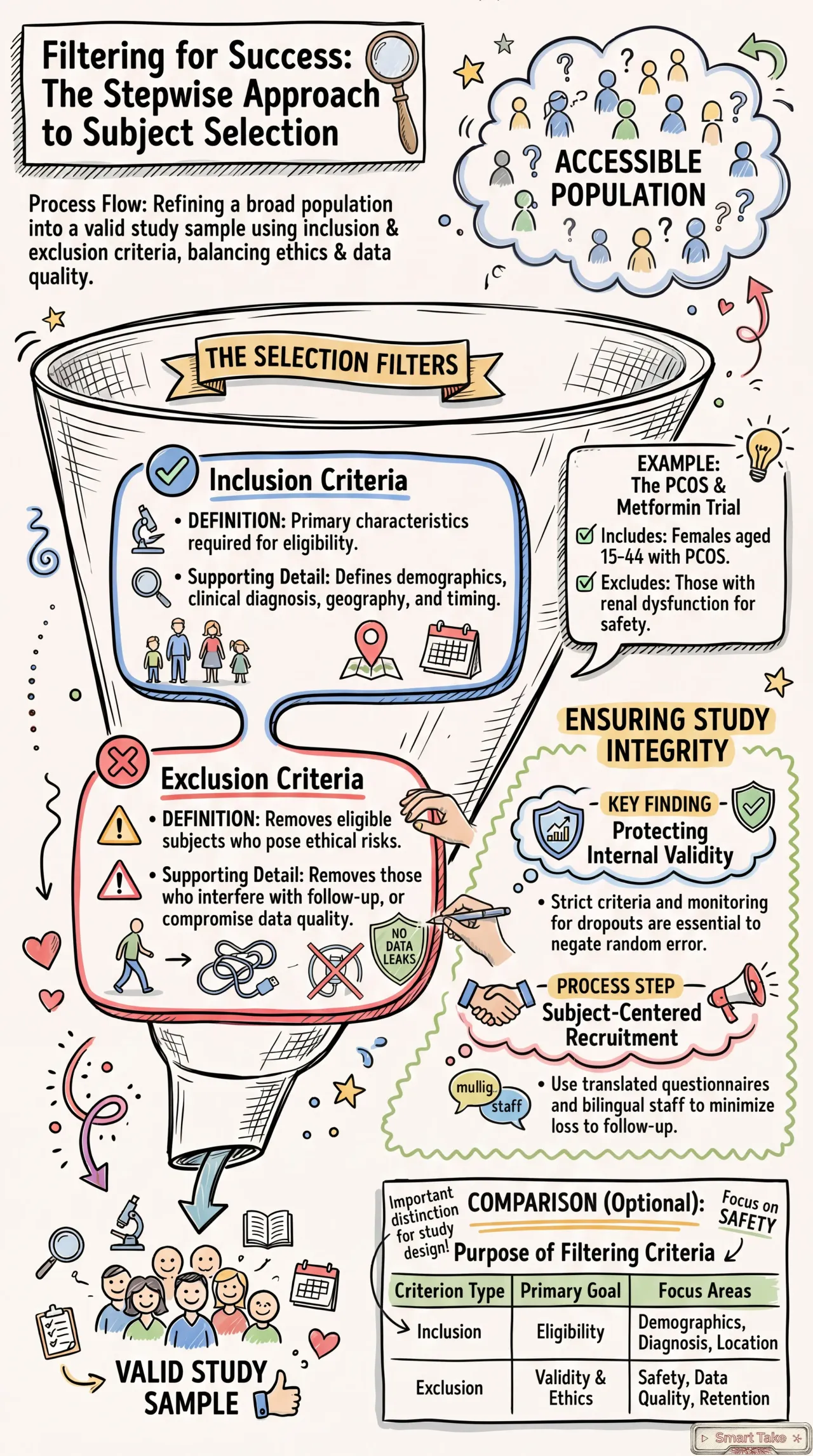
Subject selection in biomedical research is a systematic process of refining a broad target population into a valid study sample using specific clinical and epidemiological filters. Inclusion criteria define the core characteristics (demographic, clinical, geographical, and temporal) required to answer the research question. Exclusion criteria further refine this group by removing individuals who may compromise data quality, interfere with follow-up, or present ethical and safety risks. Effective recruitment strategies must balance internal validity with generalizability by selecting appropriate study sources and implementing compliance mechanisms to minimize non-response and loss to follow-up.
Key points
- Inclusion Criteria: Define the primary eligibility characteristics (Who belongs in the study).
- Exclusion Criteria: Define why a technically eligible subject should be removed (Who is inappropriate for the study).
- Internal Validity: Protected by excluding confounding variables and high-risk subjects.
- Recruitment Goals: Achieve a representative sample and sufficient size to minimize random error.
- Retention Strategies: Use of patient-centered approaches (e.g., local language, less invasive tools) to reduce dropouts.
- Population Sources: Clinical trials often use hospital-based populations; vaccine studies require community-based samples.
1. Selection Criteria
A. Inclusion Criteria
- Defines the specific characteristics a subject must have to be included.
- Components:
- Demographic variables (e.g., age, gender).
- Clinical diagnostic features (e.g., presence of a specific disease).
- Geographical metrics (e.g., patients at a specific hospital).
- Temporal metrics (e.g., patients recruited between specific dates).
B. Exclusion Criteria
- Applied to subjects who meet inclusion criteria but possess traits that make participation unsuitable.
- Categories of Exclusion:
- Follow-up interference: Subjects likely to move or drop out.
- Data quality interference: Presence of confounding variables or concurrent treatments that distort results.
- Ethical/Safety concerns: Subjects at high risk for adverse events or with contraindications to the intervention.
2. Clinical Application Example (Metformin for PCOS Trial)
- Inclusion: Females (15-44 years) with PCOS and dysmenorrhea at a specific OPD during a defined one-year period.
- Exclusion: Subjects planning to relocate (loss to follow-up), those already on Metformin (data corruption), and those with renal dysfunction (safety/contraindication).
3. Population Sources
- Hospital-based: Ideal for clinical trials (high internal validity, easier access to sick patients).
- Community-based: Essential for vaccine efficacy studies (requires healthy subjects; more expensive/logistically difficult).
4. Recruitment and Retention Strategies
A. Primary Objectives
- Ensure the sample represents the target population.
- Achieve a sample size large enough to negate random error.
B. Challenges to Validity
- Non-response: Reduces the representative nature of the sample.
- Loss to follow-up: Compromises statistical power and internal validity (especially in observational studies).
C. Compliance Mechanisms
- Minimize use of invasive instruments.
- Use translated questionnaires (local language).
- Deploy bilingual clinical staff.
- Monitor for dropouts during the implementation phase.
5. Stepwise Approach to Subject Selection
- Define Target Population: Use clinical and demographic inclusion criteria.
- Isolate Accessible Population: Apply geographical and temporal criteria.
- Eliminate Confounders: Apply strict exclusion criteria (Ethical/Data quality).
- Sampling Procedure: Run an appropriately powered process to control random error.
- Implementation: Use patient-centered recruitment to minimize loss to follow-up.