BCBR
Topic 09 · Qualitative research methods
Analysing qualitative data
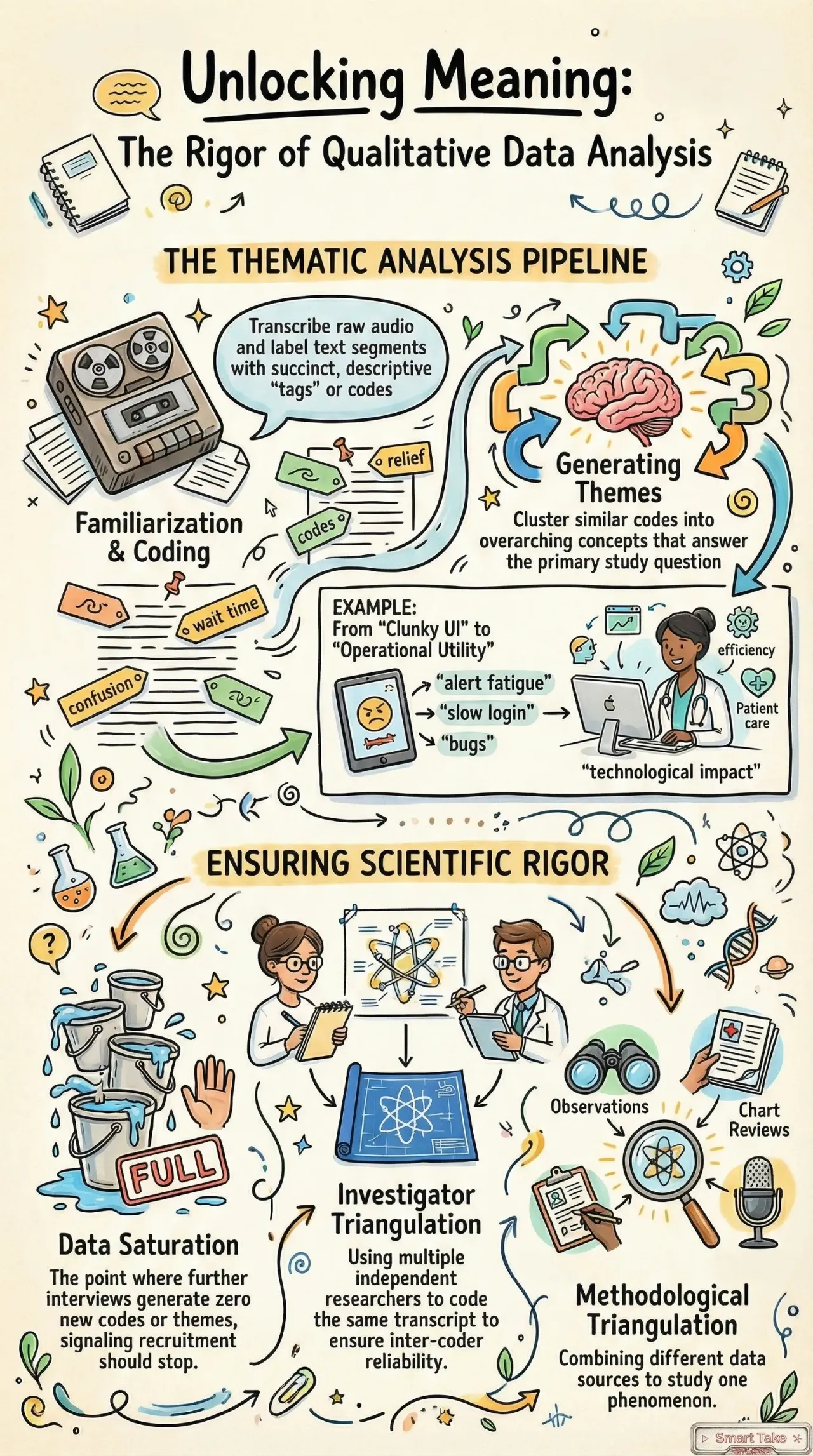
This topic focuses on the systematic analysis of qualitative data, which emphasizes the interpretation of unstructured text (transcripts, field notes, and recordings) rather than numerical processing. Unlike quantitative research, qualitative analysis relies on human interpretation within a strict framework to ensure rigor. The core process involves thematic analysis, an iterative method of familiarization, coding, and theme generation. A critical aspect of this research is identifying data saturation, where no new information emerges, and ensuring credibility through triangulation techniques to minimize investigator bias.
Key points
- Nature of Data: Qualitative analysis processes unstructured raw text instead of mathematical numbers.
- Thematic Analysis: The primary method used to identify repeated patterns and overarching concepts in medical qualitative research.
- Coding: The foundational step of labeling short segments of text with descriptive tags.
- Data Saturation: The point in purposive sampling where further data collection yields no new codes or themes.
- Triangulation: A strategy used to ensure rigor and reduce bias by using multiple methods or independent researchers.
- Credibility: Established when independent evaluators reach consistent conclusions from the same raw data.
1. Analyzing Text vs. Numbers
- Qualitative Data: Consists of massive amounts of unstructured raw text (transcripts, audio recordings, field notes).
- Human Interpretation: Since data cannot be mathematically processed, analysis depends on human interpretation.
- Rigor: Requires an exceptionally strict framework to maintain scientific validity due to the interpretive nature of the work.
2. Mechanics of Thematic Analysis
- Definition: An iterative, rigorous process of sifting through data to recognize repeated patterns.
- Familiarization:
- Meticulous transcription of audio recordings.
- Repeated reading of raw text to immerse the researcher in the data.
- Coding:
- Labeling short segments, phrases, or sentences with a succinct descriptive word (a "code").
- One transcript may generate over a hundred unique codes.
- Generating Themes:
- Clustering similar or frequent codes together.
- Themes represent overarching concepts that answer the primary study question.
3. Data Saturation and Sampling
- Purposive Sampling: Unlike quantitative research (which uses pre-calculated sample sizes), qualitative research uses purposive sampling.
- Saturation Definition: The point at which further interviews or data collection generate absolutely no new codes or themes.
- Halting Recruitment: Recruitment stops only when the researcher is certain the full spectrum of opinions has been captured.
4. Ensuring Rigor through Triangulation
- Purpose: To prevent findings from being biased by an investigator's personal assumptions.
- Methodological Triangulation:
- Studying a phenomenon using different methods.
- Example: Combining Focus Group Discussions (FGDs) with personal observations and chart reviews.
- Investigator Triangulation:
- Multiple independent researchers read the same raw transcripts.
- Researchers develop independent codes and compare findings to ensure high inter-coder reliability.
5. Clinical Application Example
- Context: Studying AI medical tool hesitancy among doctors.
- Process: Conducted 25 In-Depth Interviews (IDIs).
- Coding Example: Identifying "Fear of replacement," "Clunky UI," and "Alert fatigue."
- Outcome: Hit saturation at the 20th interview (no new codes).
- Final Theme: "Technological Overreach versus Operational Utility."
- Validation: Three independent evaluators arrived at the same theme, ensuring high qualitative credibility.